
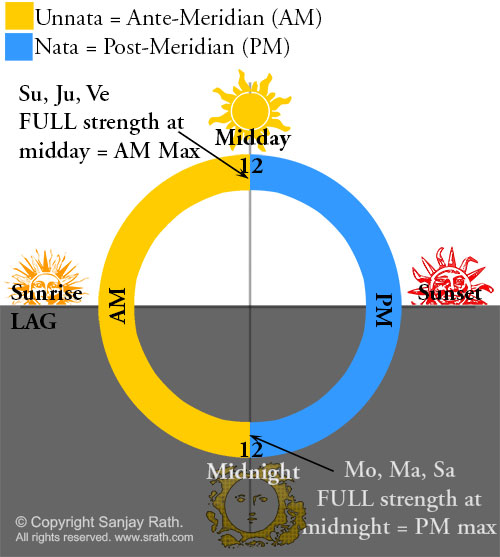
Natonnata Bala
The compound word natonnata (नतोन्नत) is composed of two words (a) नत nata and its anonym (b) उन्नत unnata. Some translations and books have mistakenly spelt this word ‘nata’ as ‘natha’. Be sure that there is no such Sanskrit word as नथ (natha) and the one with the longer ‘ā’…




 Sohamsa offers online courses in jyotish (Vedic Astrology) taught directly by Sanjay Rath as per the tradition, through narrated power points and other audio tools. The courses are at different levels, from the beginners through the intermediate to the advanced and are known as SoHamsa | DBC courses, with individual classrooms and assistant teachers